
How to Safely Move Your DIY Art Collection

Updated: May 8

If you've been making things for any length of time, you have a collection whether you think of it that way or not. Paintings, mixed media pieces, framed work, three-dimensional objects, textile pieces. Moving a DIY art collection requires more planning than regular household items because the pieces are often irreplaceable, fragile in ways that aren't obvious, and shaped in ways that standard boxes don't accommodate well.
None of it is complicated. It just requires treating each piece as the individual object it is rather than something to be efficiently packed and stacked.
Start with a catalog of your DIY art collection
Before anything gets wrapped, document what you have. Photograph each piece and note its dimensions and current condition. This serves two purposes — it keeps you organized during the move and gives you a record if anything is damaged in transit.
Organizing your craft area before packing makes this step significantly easier. When everything has a place, you can see what you actually have and assess each piece properly.
Clean each piece gently before wrapping. Dust and dirt cause surface damage during transport. A dry microfiber cloth handles most surfaces without scratching.
Packing materials that actually protect
Acid-free paper, foam boards, and bubble wrap are the core materials for packing a DIY art collection safely. Acid-free materials matter because regular cardboard and paper release chemicals over time that damage artwork in contact with them.
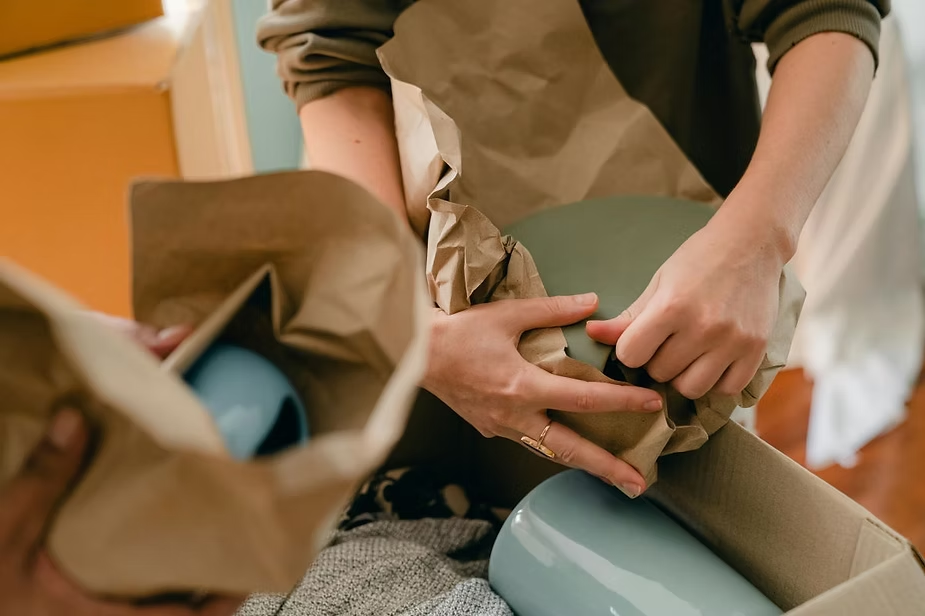
Wrap each piece individually. Corners and edges are the most vulnerable points on any framed piece — use cardboard or foam corner protectors before wrapping. For large canvases, foam sheets provide more stable protection than bubble wrap and prevent the surface from being pressed or scratched.
Pack each piece snugly in its box with no room for movement. Shifting during transit causes more damage than impact. Use rigid boxes specifically designed for artwork rather than standard moving boxes which lack the structural integrity for fragile or irregularly shaped pieces.
For interstate moves or long-distance transport, professional interstate movers who specialize in art handling are worth the cost for irreplaceable pieces. The packing techniques for valuable work are different from standard household items and professionals who do this regularly make fewer mistakes.

Transportation
Transport artwork upright where possible, the same way you'd store framed photographs or mirrors. Laying pieces flat puts pressure on surfaces and increases the risk of damage. In a moving truck, secure artwork so it can't shift — straps, padding between pieces, and placement against a stable wall rather than loose in the load.
Avoid extreme temperature exposure. Don't leave artwork in a hot car or truck for extended periods. Heat warps and cracks paint, and humidity from rain or condensation damages paper, photographs, and delicate surfaces. Climate-controlled transport is worth it for anything irreplaceable.
If possible, transport the most valuable or fragile pieces in your own vehicle where you have direct control over how they're handled.
Custom crates for irreplaceable pieces
For large, very valuable, or structurally complex pieces, custom crates offer significantly better protection than boxes. They're sized to the artwork, lined with foam padding, and built to withstand the kind of handling that happens during a move. If you're shipping work for sale or exhibition, a custom crate is standard practice for a reason.
Insurance for artwork during a move is worth considering. Many moving companies offer it. For pieces that can't be replaced, the cost is almost always worth the security.

Unpacking
Unpack slowly and inspect each piece immediately for damage. Document anything you find with photographs before attempting any repair. Have a clean, clear workspace for unpacking — removing protective wrapping in a cluttered space is how accidents happen.
If work needs to be stored before it's displayed, choose a climate-controlled environment. Basements, attics, and garages have temperature and humidity fluctuations that damage work over time. Organizing small spaces with thoughtful storage systems keeps your collection accessible and protected while you work out the permanent display arrangement.
When you're ready to display work, hang it with proper hardware at the right weight rating. Level placement matters both aesthetically and for long-term stability.
The DIYvinci Community is free, off social media, and full of people who care enough about what they make to want it properly protected. community.diyvinci.com


Comments